
PROJECT #4
Not Sure Which Is the Right Program for You? Compare Our Bachelor’s Degrees!
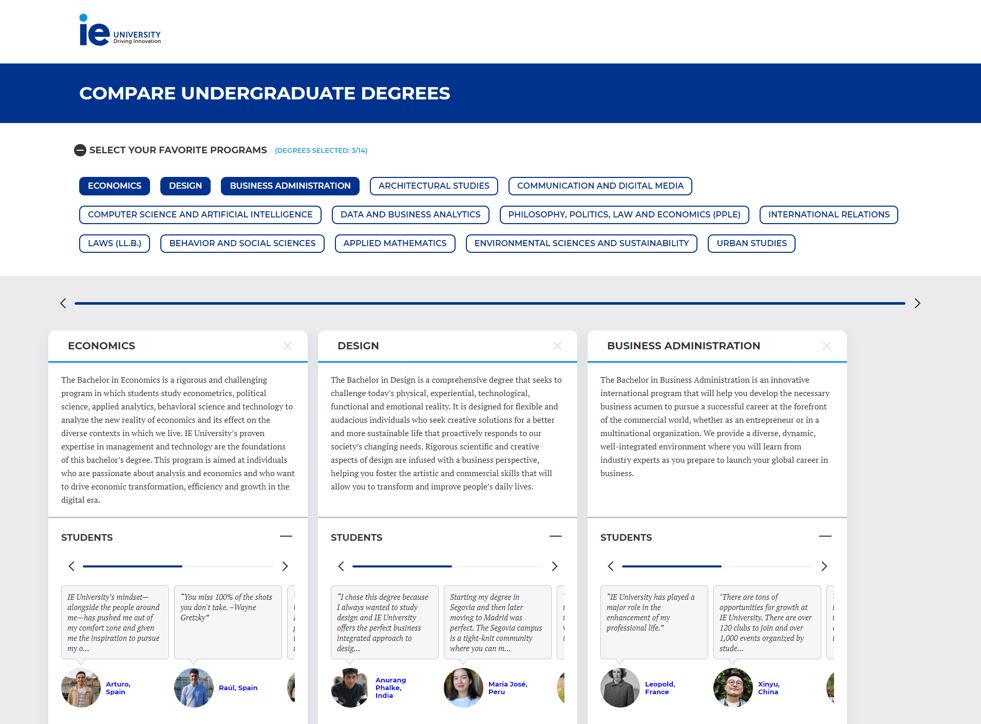
An Easy Way To Compare IE University’s Bachelor’s Degrees and Make the Right Choice
Comparing different Bachelor’s Degrees can be a challenging task for prospective candidates and students, especially considering the wide range of programs offered by IE University in various disciplines such as law, international relations, behavioral sciences, data and business analytics, computer science, politics, architecture, and more. Many candidates find it difficult to determine the most suitable program for their interests and goals, particularly when they express interest in multiple programs that vary significantly in nature and content. Making such decisions at a young age can be overwhelming.
Through analyzing online behavior, we identified that over 30% of potential undergraduate students exhibited uncertainty regarding their choice of program, even after initiating the online application process. This uncertainty was evident as they frequently changed their preferred program midway through the application process or regularly visited websites of programs different from the one they initially applied to. To support these students in making informed decisions and facilitate a comprehensive comparison of our program portfolio, we developed a digital comparison tool.
The purpose of this tool is to simplify the decision-making process and enable students to contrast various programs effectively. By utilizing the digital comparison tool, students can gain a better understanding of the unique features, curriculum, and career prospects associated with each program. This empowers them to make an informed choice that aligns with their interests, aspirations, and long-term objectives.
Here’s a Summary of What We Did:
1. PERSONAS & PROBLEMS SCENARIOS
- Researched online users’ behavior.
- Drafted interview guide.
- Conducted +12 interviews and online behavior tests with students.
- Drafted personas and problems scenarios.
2. PROPOSITION DESIGN & TESTING
- Drafted pivotal hypotheses.
- Developed assumptions.
- Drafted comparison tool MVP.
- Defined metrics for measurement and success.
- Experiment design.
3. SOFTWARE DESIGN
& PROTOTYPING
- Storyboarded key customer journeys.
- Drafted user stories and story map.
- Developed preliminary. prototype for review and testing.
4. USABILITY TESTING & INTERFACE ITERATION
- Designed and validated usability test plan.
- Created interactive tool prototype.
- Conducted usability tests with current and potential students.
- Validated prototype after tests.
- Comparison tool development and deployment.
Personas and Problem Scenarios:
In this project, our research specifically targeted high school students who will potentially apply to IE University as undergraduate students. We recognized that a significant portion of these students faced uncertainty when it came to selecting the right program of study. To address this challenge, we aimed to provide them with a comprehensive means of comparing different program options based on various aspects such as location, duration, faculty, student body, curriculum, study plan, and more. The process of comparing programs can be overwhelming for many students, and our research aimed to identify key focal points that would assist them in making informed decisions.
Through our research, we identified several crucial focal points that emerged as significant considerations for prospective students. These focal points encompassed aspects such as program location, duration, faculty qualifications and expertise, the composition of the student community, the content and structure of the curriculum, and the study plan. By understanding the importance of these factors to students, we aimed to develop a comparison tool that effectively addresses their needs and facilitates a well-informed decision-making process.
By focusing on these focal points and conducting comprehensive research, we aimed to provide high school students with the necessary information and tools to navigate the complexities of program selection and empower them to make a choice that aligns with their individual preferences, goals, and aspirations.
- “I like more than one program, and I am not sure how to choose the right one for me.”
- “I feel overwhelmed with so much information and I am not able to compare the programs that I like.”
- “I am not sure if I am not considering a program that I could like.”
- “I am afraid I might make the wrong choice if I am not able to contrast programs on different dimensions that are important to me.”
- “There is so much information that I don’t know where to start.”
Interview Questions Examples:
Because our objective and area of inquiry were broad, we kept initial questions general, and then began narrowing them down as we progressed both with the interviews:
- Why do you want to pursue a Bachelor’s Degree?
- Do you know at which university you want to study?
- What types of programs/areas of knowledge attract you the most?
- How do you contrast the different program options once you have chosen the ones you like?
- Do you find it essential to consider different criteria and dimensions when comparing programs? Which are the most and less important?
- …
- ..
- .
| PROBLEM SCENARIO | ALTERNATIVE | VALUE PROPOSITION |
| Harold the High School student doesn’t know which is the right program for him. | He could search online on many university websites until he finds a program that seems like a good match. | IE University’s Program Comparison Tool offers an easy and interactive way to compare programs. |
| Harold the High School student is worried about making the right choice. | He could research more about the programs that he likes and try to find relevant information beyond the program’s web pages but this requires significant effort and he could end up facing a paradox of choice. | IE University’s Program Comparison Tool compares programs based on relevant criteria which are essential for students when deciding which program to study. |
Due to the significant impact it has on the consumer journey, the program comparison tool was strategically integrated into various touchpoints to assist candidates in selecting the right program. Here are the key ways in which the tool was utilized:
- Admissions Team: The admissions team actively utilizes the program comparison tool to assist students in contrasting the programs they are interested in. By providing personalized guidance and insights, the tool helps students make informed decisions about their program choices.
- Website Integration: The program comparison tool is prominently featured on IE University’s website. This ensures easy accessibility for prospective students who visit the website, allowing them to explore and compare different programs at their convenience.
- Automated Workflows: The tool is incorporated into automated workflows, enabling targeted and timely delivery to potential candidates. By proactively sending the tool to students during their application process, it enhances their ability to evaluate and compare programs effectively.
- Fairs and Commercial Events: The sales team utilizes the program comparison tool during fairs and commercial events. It serves as a valuable resource for engaging with prospective students, providing them with a tangible tool to evaluate program options and make informed decisions.
By leveraging these channels, the program comparison tool maximizes its reach and effectiveness in assisting candidates throughout their decision-making process.
User Stories:
We anchored our work on user stories like this:
EPIC STORY:
- As Harold the High School student, I want to know which is the right IE University’s undergraduate degree for me so that I can start my online application.
CHILD STORIES:
- As a high school student, Harold wants to know which IE University program would be the right one for him.
- As a high school student, Harold wants help in understanding what are the main differences between the programs so that he can choose one.
- As a high school student, Harold wants to know which is the ideal candidate for each program so that he can evaluate if he is a good candidate.
- As a high school student, Harlod wants an easy way to contrast the programs’ study plans and academic content to determine which one he finds more attractive.
What We Built:
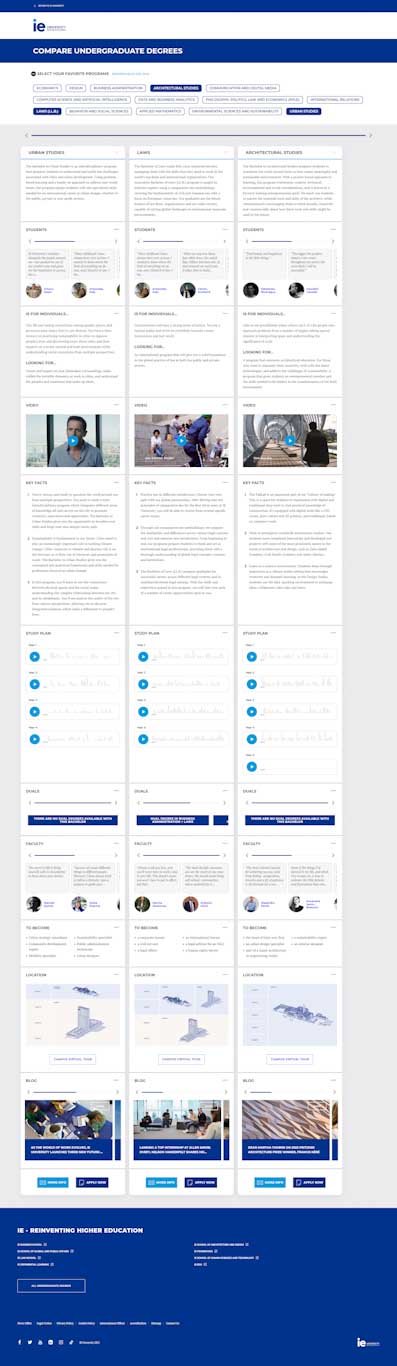
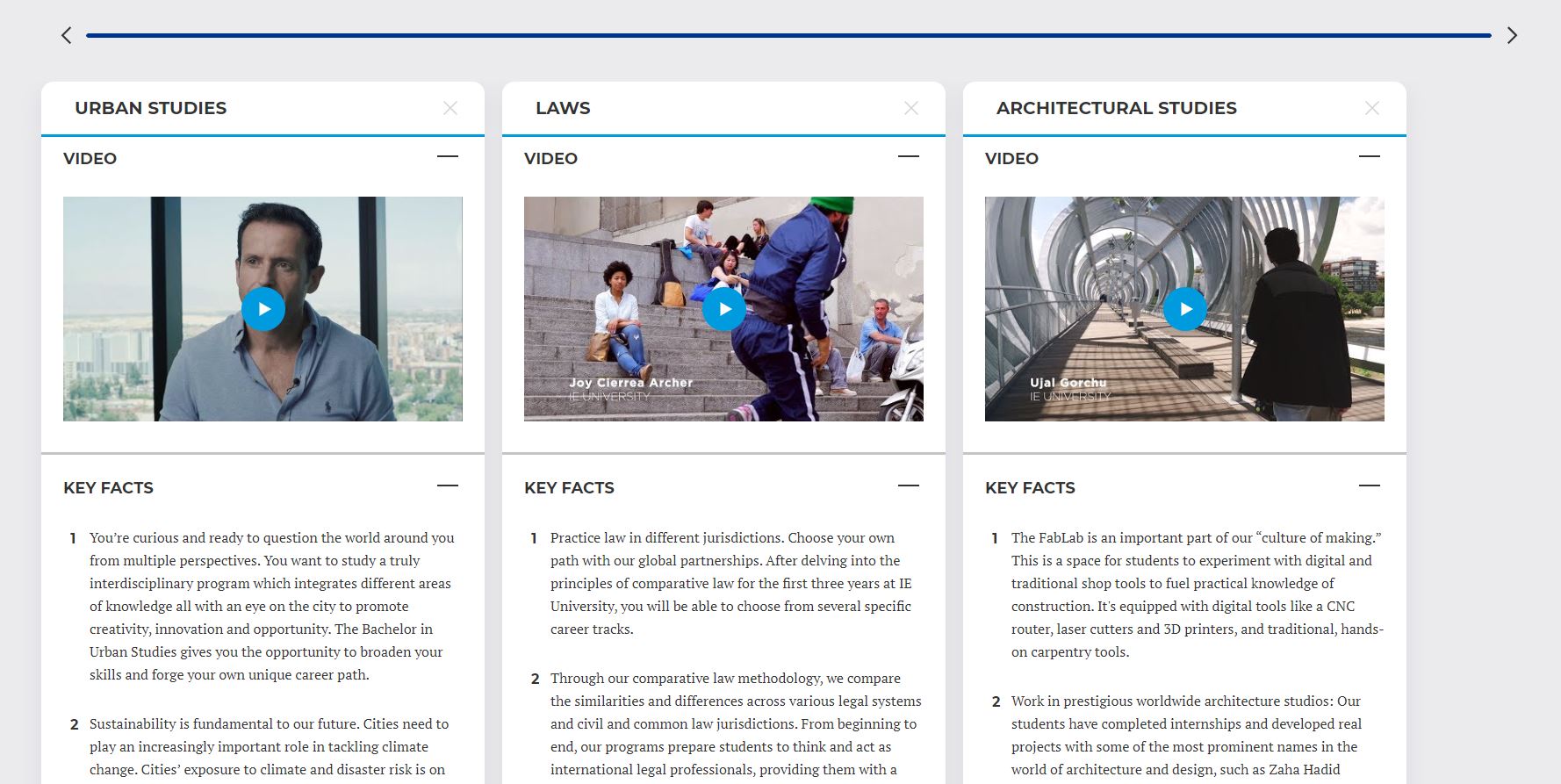
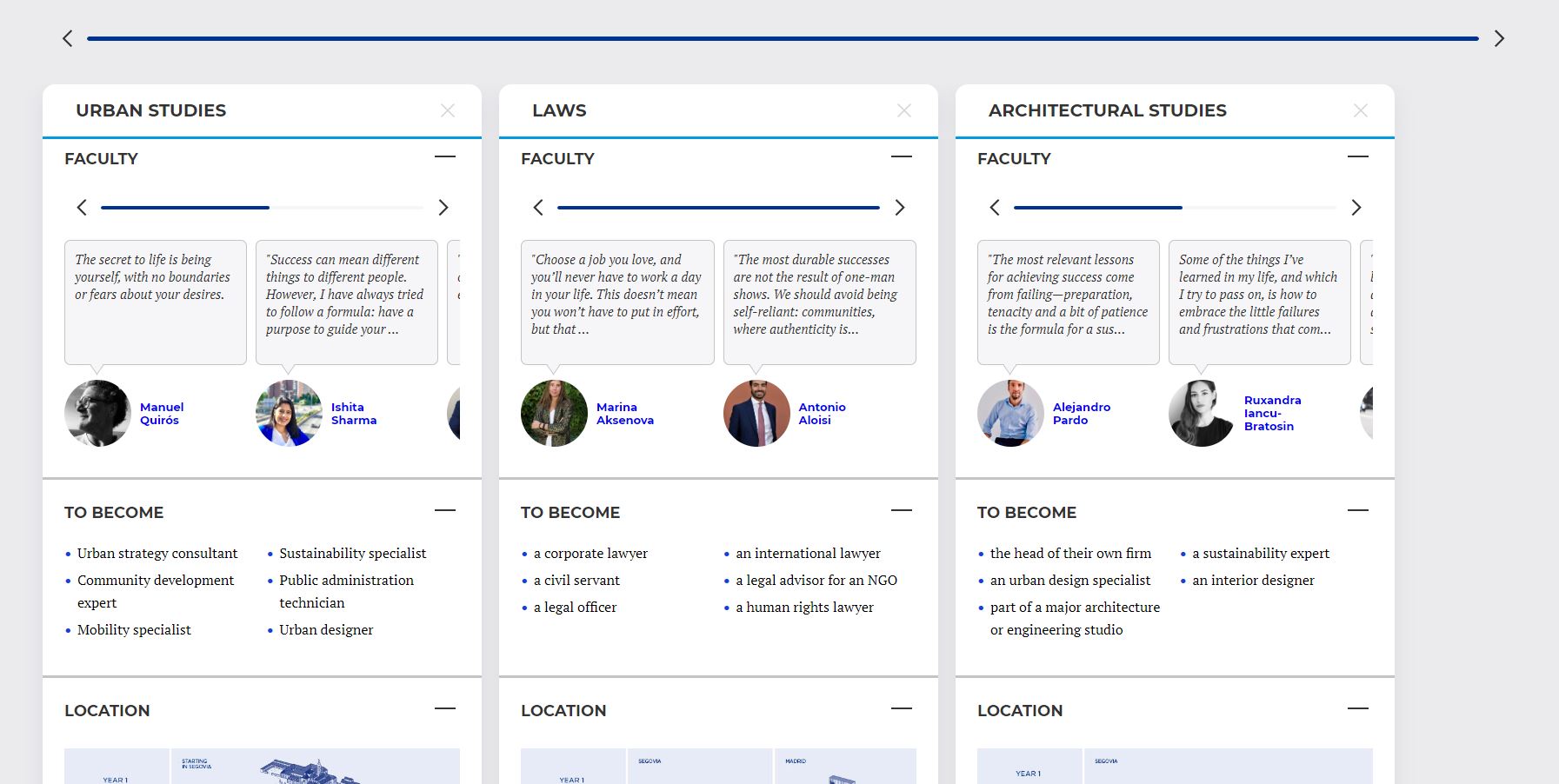
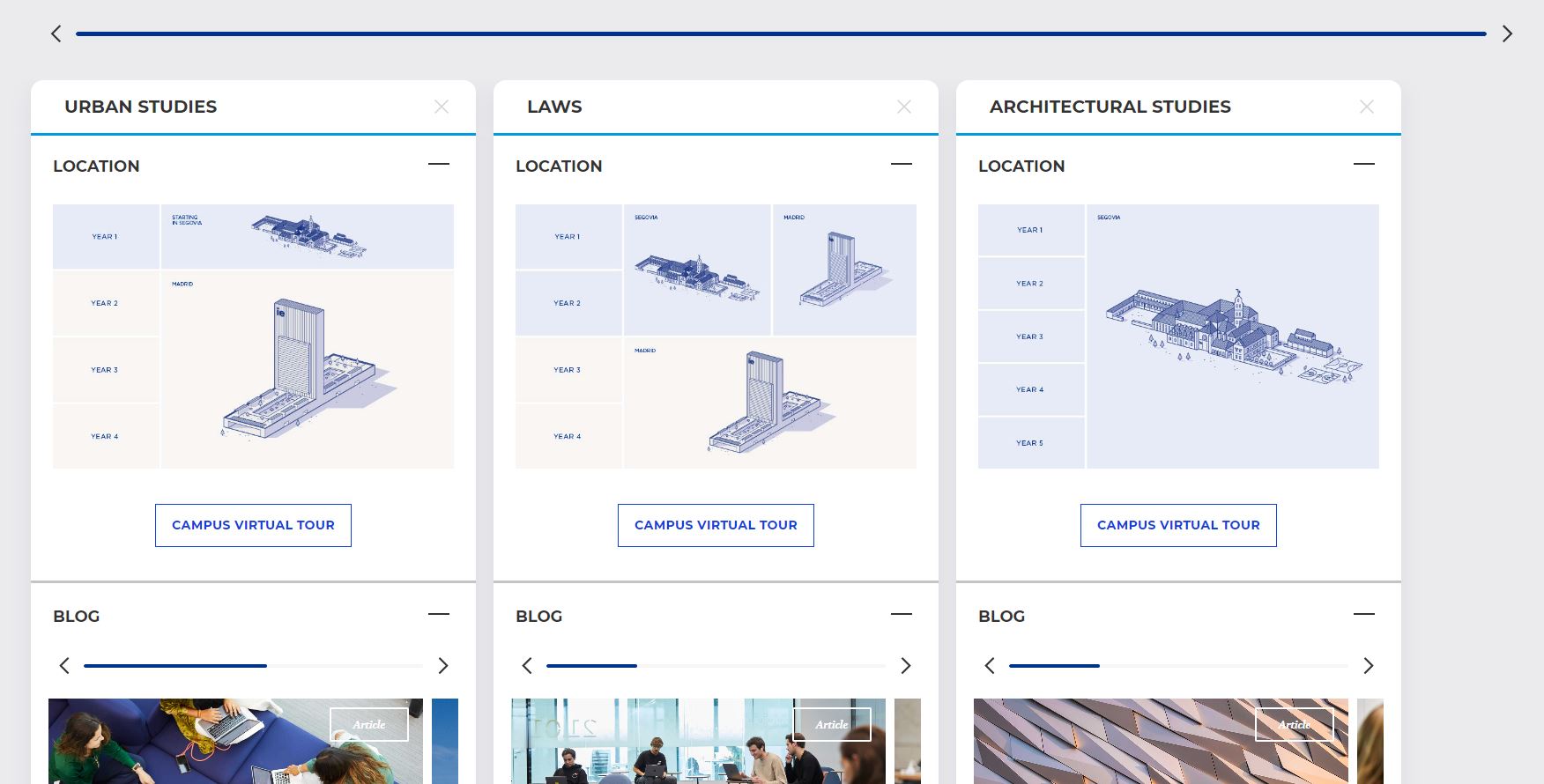
After conducting extensive research, prototyping, and refining the concept, the initial minimum viable product (MVP) of IE University’s Program Comparison Tool was developed. This served as the foundation for further iterations and updates over time to enhance its functionality and user experience. One notable update was the introduction of unique URLs when candidates selected different programs.
By generating unique URLs for each program combination, the tool enables effective online tracking and measurement. This data provides valuable insights into candidate behavior and preferences, allowing for better analysis and optimization of the tool’s performance.
Additionally, the unique URLs facilitate the creation of personalized smart content emails. By leveraging the candidates’ online behavior and the combinations they selected, targeted emails can be sent to potential students. These emails contain pre-selected program combinations that align with their interests, enhancing their engagement and providing them with tailored information.
Demo:
Results Summary:
- The Program Comparison Tool proved to be highly utilized, with over 30,000 instances of usage recorded in the period from January to November 2022. This indicates a strong demand and interest among potential candidates in comparing different programs offered by IE University.
- On average, users spent approximately 1 minute and 30 seconds on the tool’s page. This suggests that users engaged with the tool and took the time to explore and evaluate the different program options available to them.
- Data analysis revealed a significant correlation between the use of the Program Comparison Tool and the likelihood of potential candidates starting the online application process. Candidates who utilized the tool were found to be twice as inclined to initiate their application, indicating that the tool played a crucial role in facilitating their decision-making process and encouraging them to take the next step.
 Gabriel Rodriguez